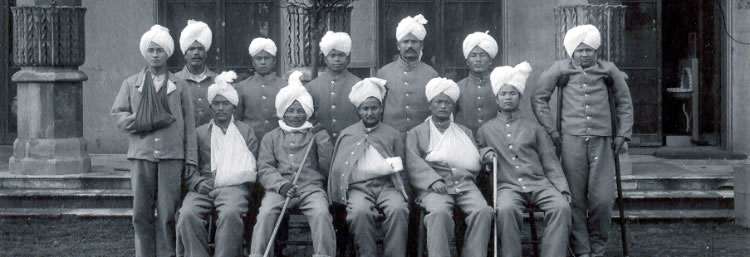
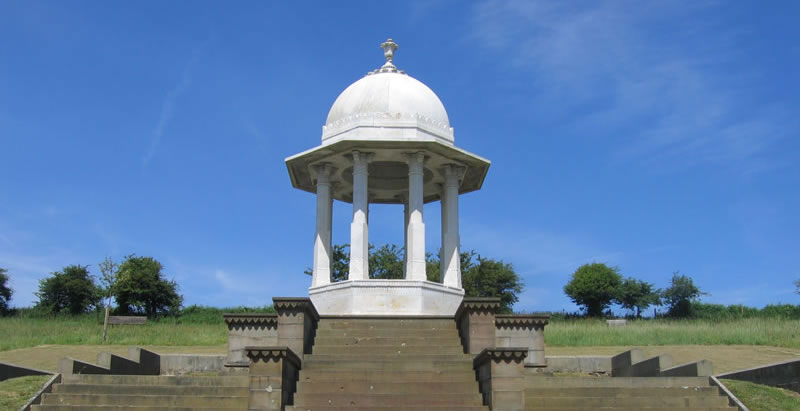
Today three Memorials exist in Brighton to commemorate the Indian soldiers that passed through the Brighton hospitals during the First World War 1914 – 1918.
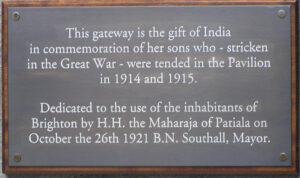
The First is the gateway to the Pavilion grounds from the South. The second is the Chattri which is located on the South Downs near Patcham. The third is the India Gate memorial plaque at the South entrance of the Royal Pavilion.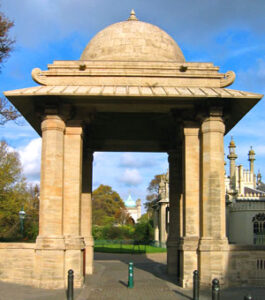 India Gate also known as the Royal Pavilion Gateway
The Pavilion Gateway was a gift from the Princes and people of India to the residents of Brighton & Hove, as a token of gratitude for the care provided to their sons. It was erected as a lasting memorial to the use of various Brighton buildings for the Indian wounded. On Wednesday, October 26th, 1921, His Highness the Maharaja of Patiala accepted an invitation to unveil and dedicate the new gateway, presenting it to the Corporation of Brighton for the use of its inhabitants.
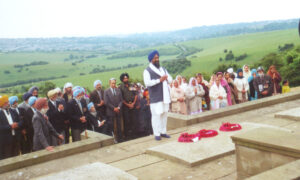
The first memorial service at the Chattri in 2000.
The Chattri
The memorial now known as the Chattri was erected after the first world war and unveiled by the Prince of Wales on February 21, 1921. It stands on the exact spot where the bodies of Hindu and Sikh soldiers were cremated. The Chattri bears the following inscription in Urdu, Hindi, and English:
“To the memory of all Indian soldiers who gave their lives for their King-Emperor in the Great War, this monument, erected on the site of the funeral pyre where the Hindus and Sikhs who died in hospital at Brighton passed through the fire, is in grateful admiration and brotherly affection dedicated”.
Today the Chattri can be seen from many parts of the town – a white memorial within an area of green, marked off by a square of trees. Since June 2000 a commemorative service in honour of the Sikh and Hindu soldiers who died in Brighton during the First World War has been held at the Chattri.